Watercolor Rodents Clipart: Charming Mice & Rats for Creatives
The Unique Appeal of Hand-Drawn Watercolor Clipart
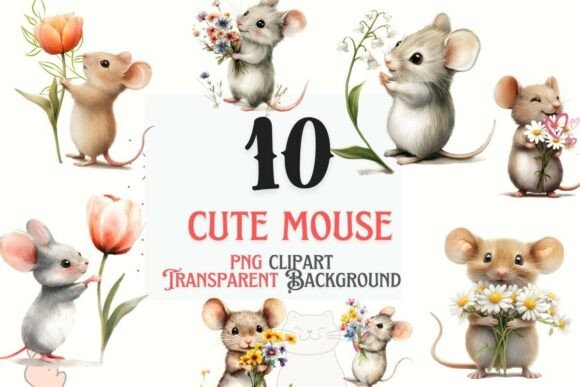
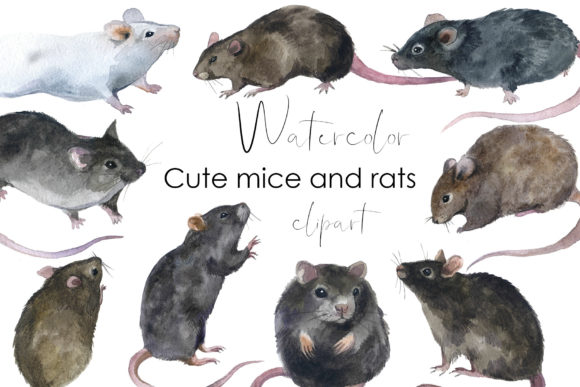
There's something undeniably charming about watercolor artwork that digital tools often struggle to replicate. The slight bleeding of pigments, the organic texture of paper showing through, and the hand-drawn imperfections give each piece a unique personality. This particular collection of Watercolor Rodents Clipart captures that essence perfectly, featuring mice and rats rendered with a delicate, artistic touch. Unlike generic vector graphics, these illustrations feel personal and crafted, making them ideal for projects where authenticity matters. The transparent background means they can be layered seamlessly onto any surface, from textured paper to digital mockups.
Each element in this set measures 3.4 by 4.4 inches at 300 DPI, a practical size for both print and digital applications. The high resolution ensures crisp edges and vibrant colors when printed, whether you're creating a small sticker or scaling up for a poster. The PNG format preserves the watercolor textures and transparency, which is crucial for maintaining the hand-painted look. For designers, this means less time spent removing backgrounds or adjusting colors—the artwork arrives ready to use. The collection includes nine separate files, giving you variety without overwhelming your project with too many options.
Practical Applications Across Creative Projects
Where does this style of clipart actually work best? Think about projects that benefit from a handmade, artisanal aesthetic. Wedding invitations, baby shower decorations, or boutique branding for a pet shop immediately come to mind. The gentle watercolor style adds warmth without being overly childish, making it suitable for adult-oriented products like greeting cards, journal covers, or decorative prints for a nursery. Entrepreneurs selling on platforms like Etsy or Shopify can use these illustrations to create cohesive product lines—imagine matching postcards, tote bags, and mugs featuring the same charming rodent motifs.
For content creators and bloggers, these graphics offer a way to break up text-heavy posts with visual interest. A watercolor mouse peeking from the corner of a recipe blog or a rat illustration accompanying a children's story adds character without distracting from the content. The transparent background allows for creative placement: layer them over photographs, use them as section dividers, or incorporate them into custom headers. Social media managers can use them to create themed posts for events like National Pet Day or to add whimsy to an otherwise corporate feed. The key is matching the clipart's personality to your brand voice—it works best for brands that value approachability, creativity, and a touch of nostalgia.
Integrating Watercolor Art into Professional Design Work
When incorporating hand-drawn elements like these into professional projects, balance is essential. A single watercolor rodent can serve as a focal point in a logo design for a small business, but pairing it with clean, modern typography prevents the overall look from becoming too cluttered. Consider using a serif font for headings to complement the traditional feel of the watercolor, or a sans serif font for body text to ensure readability. The clipart's organic shapes contrast well with geometric layouts, so don't be afraid to place them against structured grids or minimalist backgrounds. This juxtaposition often creates visual interest and makes the artwork stand out.
For packaging design, think about how the watercolor texture will reproduce on different materials. Test prints on matte paper, glossy cardstock, or fabric to see how the colors and details hold up. The 300 DPI resolution is sufficient for most small to medium print runs, but always request a proof before committing to large quantities. If you're using the clipart for digital products—like printable wall art or digital planners—ensure the file dimensions align with your template sizes. The 3.4 x 4.4 inch measurement is versatile, but you may need to adjust scaling for different applications. Remember, this is a digital download, so you have the flexibility to resize and manipulate the files within the terms of your license.
Choosing and Pairing Design Elements Thoughtfully
Successful design often comes down to thoughtful pairing. With Watercolor Rodents Clipart, consider what other elements will share the stage. If you're creating a wedding suite, pair the illustrations with a script font that echoes the flowing watercolor strokes. For a children's book, combine them with a playful handwritten font to maintain consistency in style. Avoid mixing too many decorative elements—let the clipart be the star. Use solid colors or subtle textures for backgrounds, and choose complementary hues from the artwork's palette for text and borders. This creates cohesion without overwhelming the viewer.
Before finalizing any project, step back and evaluate the overall composition. Does the clipart enhance the message or distract from it? Is the hierarchy clear—does the eye move naturally from the text to the illustration? Test your design at different sizes to ensure details remain visible. For commercial use, always verify the licensing terms, especially if you're producing items for resale. Most digital clipart licenses allow for this, but it's wise to double-check. Ultimately, the goal is to use these assets to create something that feels both professional and personal—a combination that resonates with audiences and elevates your work beyond the ordinary.