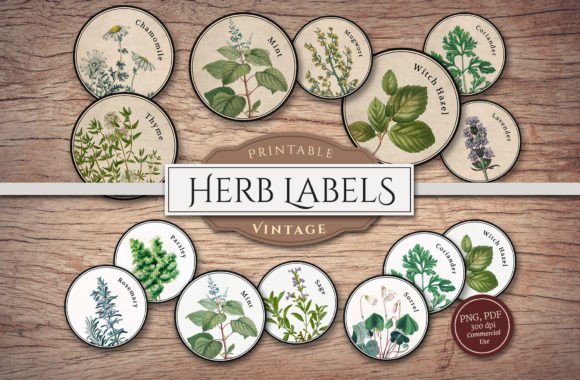
Herb Labels: Vintage Illustrations for Modern Apothecary and Craft Projects
When you’re building a brand, curating a product line, or simply organizing your personal pantry, the details matter. A generic sticker feels impersonal, but a hand-illustrated, vintage-inspired label transforms a simple jar of dried leaves into a piece of art. This is the core appeal of these specific Herb Labels—a digital download collection designed to bridge the gap between historical botanical illustration and modern DIY utility. They aren't just text on a circle; they are distinct visual assets that carry the weight of tradition and the clarity of professional design.
The Aesthetic: Where Botanical Art Meets Digital Utility
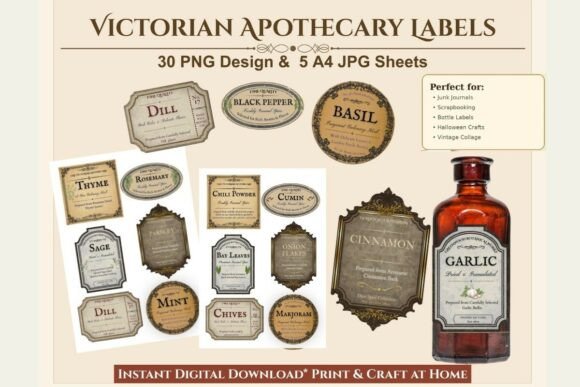
The visual personality of these Herb Labels is rooted in the "green witch" and Victorian apothecary aesthetic, but they possess a versatility that extends far beyond Halloween props or gothic decor. The illustrations feature fine linework and cross-hatching techniques reminiscent of vintage woodblock prints. This style provides a sense of authenticity and history, suggesting that the contents of the jar have been curated by a knowledgeable herbalist rather than just poured out of a plastic bag.
What makes this collection particularly effective for designers and creators is the availability of two distinct background options: a vintage, aged texture and a crisp, clean white. The vintage background offers immediate "ephemera" value. If you are scrapbooking, creating a mood board, or designing props for a period-specific photoshoot, the weathered look saves you the post-processing time of distressing the image yourself. It feels tactile and organic. Conversely, the white background functions as a clean, modern design asset. It strips away the noise, allowing the intricate botanical illustrations to stand out. This version works perfectly for high-contrast packaging design, web graphics, or any project where you need the label to pop against a colored jar or bottle.
The collection covers a comprehensive list of 18 herbs, ranging from culinary staples like Basil, Thyme, and Rosemary to the more mystical and medicinal Mugwort, Wormwood, and Witch Hazel. This range allows for cohesive visual storytelling across different product lines. You can use the Sage label for a culinary spice jar and the Mugwort label for a sleep pillow sachet, maintaining a unified visual language across your entire collection.
Practical Applications: Beyond the Spice Rack
While the immediate application for these Herb Labels is obvious—organizing your kitchen or labeling homemade products—their utility in professional design and branding is where they truly shine. As a creative professional, I often look for assets that solve multiple problems. Here is how these labels fit into various workflows:
- Packaging Design and Branding: For small business owners in the skincare, tea, or herbal remedy industries, packaging is your first handshake with the customer. Using these labels on glass apothecary bottles or kraft paper pouches instantly elevates the perceived value of the product. It suggests a small-batch, artisanal quality that generic labeling fails to convey. The circular format is versatile enough to serve as a primary label, a secondary seal, or a hang tag.
- Digital Content and Social Media: In the age of Instagram and Pinterest, visual cohesion is key. These illustrations work beautifully as digital stickers for Instagram Stories, header graphics for blog posts about gardening or wellness, or as part of a cohesive brand kit for a holistic health coach. The 300 DPI resolution ensures that even when cropped or zoomed in for a mobile screen, the linework remains sharp and professional.
- Editorial and Publishing: If you are a publisher or blogger focusing on cookbooks, gardening guides, or lifestyle magazines, these assets serve as excellent editorial illustrations. They can break up text-heavy pages, act as section dividers, or provide visual context for recipes. Unlike stock photos, which can feel generic, these vintage illustrations add a layer of editorial sophistication and charm.
- Crafting and Physical Goods: For the hobbyist or crafter, the inclusion of A4-sized collage sheets in PDF format is a massive time-saver. It removes the hassle of manually arranging images in Photoshop or Word. You can print these sheets on sticker paper, vellum, or cardstock to create immediate physical assets. They are ideal for junk journaling, creating party favors for a garden-themed wedding, or adding a vintage touch to handmade cards.
Strategic Design Considerations
Integrating pre-made art into a professional project requires a strategic eye. While these Herb Labels are designed to be "plug and play," understanding how to manipulate them will maximize their impact on your brand identity.
Typography Pairing: The labels rely on illustration, but they exist within a broader typographic landscape. When placing these labels on a product, consider the surrounding text. Because the labels have a vintage, organic feel, they pair exceptionally well with clean, modern sans-serif fonts (like Helvetica or Futura) to create a contrast between "old world" ingredients and "modern" production standards. Alternatively, pairing them with a humanist serif font (like Garamond) creates a seamless, classic, and academic look suitable for apothecary branding.
Color Theory: The vintage background labels contain warm, sepia-toned hues. When designing your layout, pull colors from the illustration itself—muted greens, ochres, and browns—to create a harmonious palette. If you are using the white background labels, they offer a blank canvas. You can colorize the white background in your design software (using clipping masks) to match your specific brand hex codes without obscuring the illustration details.
Commercial Licensing and Scalability: For entrepreneurs, understanding the license is as important as the art itself. These assets are cleared for commercial use, meaning you can legally incorporate them into products you sell—whether that’s a t-shirt, a mug, or a bottle of tincture. This is a significant advantage over scraping images from search engines, which exposes your business to copyright infringement risks. However, it is crucial to remember that the license prohibits reselling the images "as-is." You cannot simply print the PDFs and sell them as a digital download product to other designers. The value must be added through your own creative application—combining them with other design elements, integrating them into a physical product, or using them as part of a larger brand identity system.
Testing and Iteration: Before committing to a full production run, test the labels on your specific substrate. A label printed on glossy sticker paper will look different than one printed on matte paper or decoupaged onto a porous terracotta pot. The 300 DPI resolution provides the flexibility to resize the images. While the primary sizes are 1", 2", and 3", the high resolution allows for some scaling up or down without significant pixelation, though staying within the recommended range ensures the sharpest reproduction of the botanical details.
Ultimately, these Herb Labels are more than just decorative circles. They are functional design assets that communicate quality, tradition, and care. Whether you are a graphic designer building a visual identity for a new wellness brand, a crafter organizing your studio, or a publisher laying out a cookbook, these illustrations provide a reliable, high-quality foundation for your creative projects. They offer a way to infuse your work with the timeless beauty of botanical art, ensuring your final product feels curated, intentional, and professional.